What to look for in a metal detector?
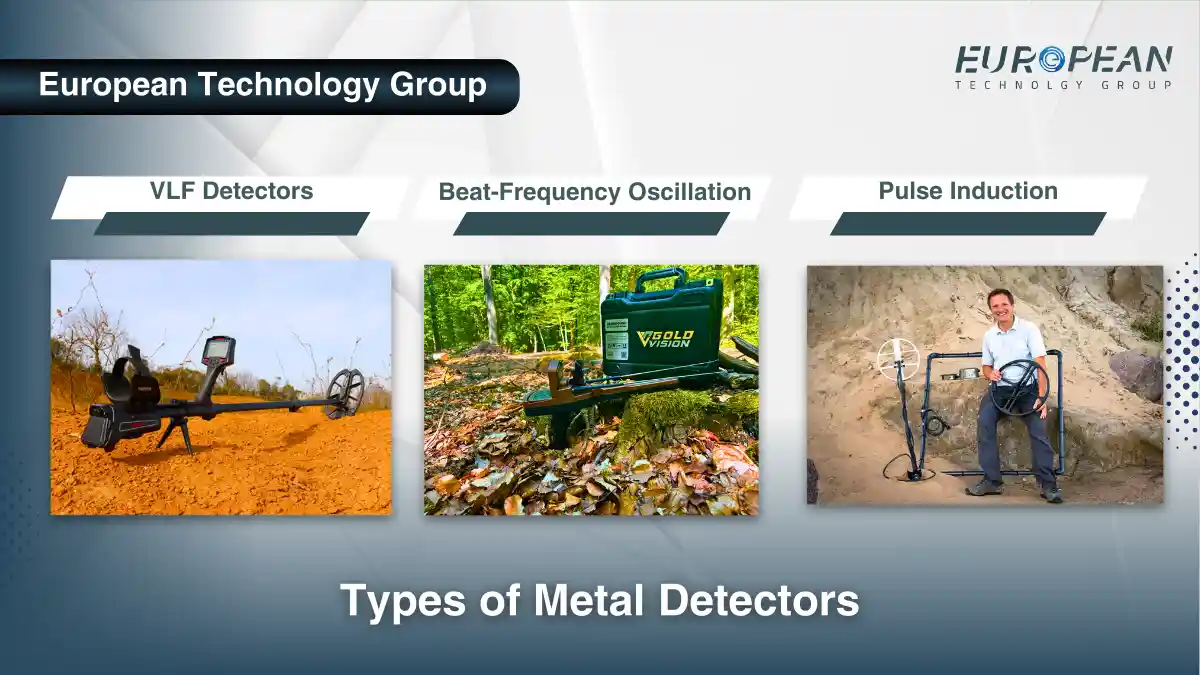
Types of Metal Detectors

  • VLF Detectors: Also known as "Very Low-Frequency detectors," VLF detectors offer versatility for a wide range of tasks. They possess the capability to differentiate between different metals and feature adjustable sensitivity levels.
  • Pulse Induction (PI) Detectors: Ideal for beach hunting, underwater diving, or searching in mineral-rich areas, PI detectors are unaffected by saltwater or mineralization, making them well-suited for such environments.
  • Beat-Frequency Oscillation (BFO) Detectors: BFO detectors represent the simplest and most economical option. While they are user-friendly, they may lack some of the advanced features found in other types of detectors.

What to look for in a metal detector? - From European Technology Group

Today we at Eurotechnology Group provided you with our next article, which is a good guide for every beginner who wants to buy the device..

What to look for in a metal detector? | European Technology Group

Today we at Eurotechnology Group provided you with our next article, which is a good guide for every beginner who wants to buy the device..

What to look for in a metal detector?

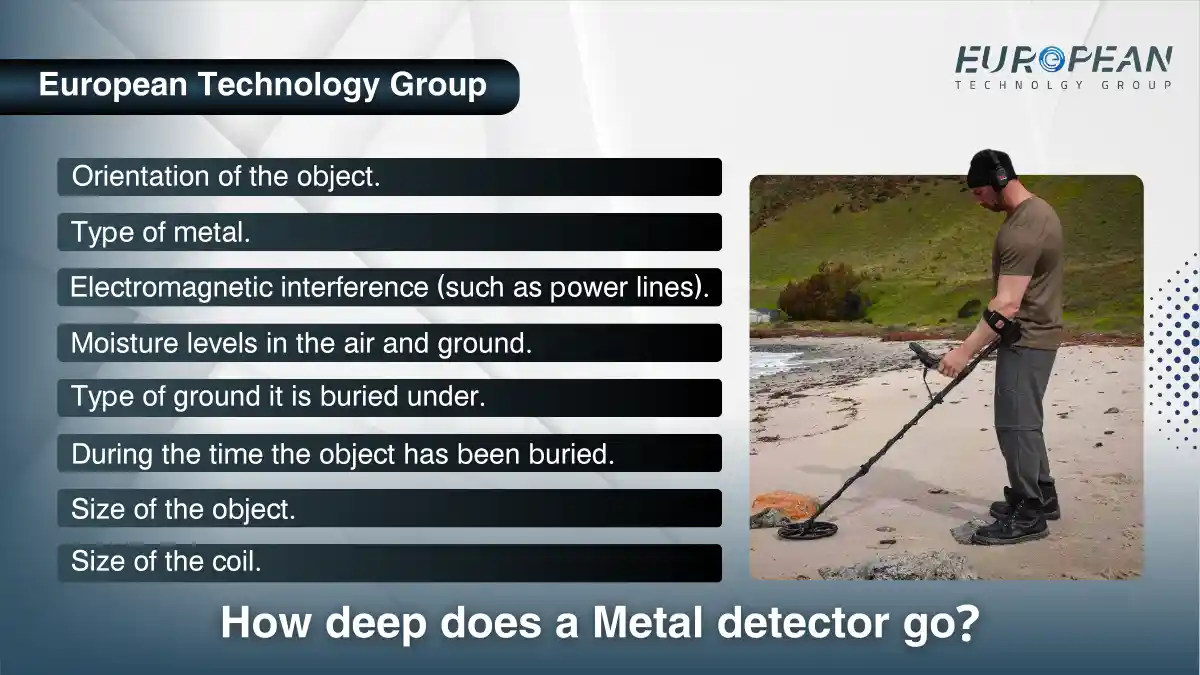
How deep does a Metal detector go?

The depth at which a detector can detect depends on various factors, including:

  1. Size of the object.
  2. Type of ground it is buried under.
  3. During the time the object has been buried.
  4. Moisture levels in the air and ground.
  5. Type of metal.
  6. Size of the coil.
  7. Electromagnetic interference (such as power lines).
  8. Orientation of the object.

Many of these variables are beyond your control. Typically, finding a 50-cent coin buried 15cm underground is well within the detection range of most entry-level detectors.

What to look for in a metal detector?

What to look for in a metal detector?

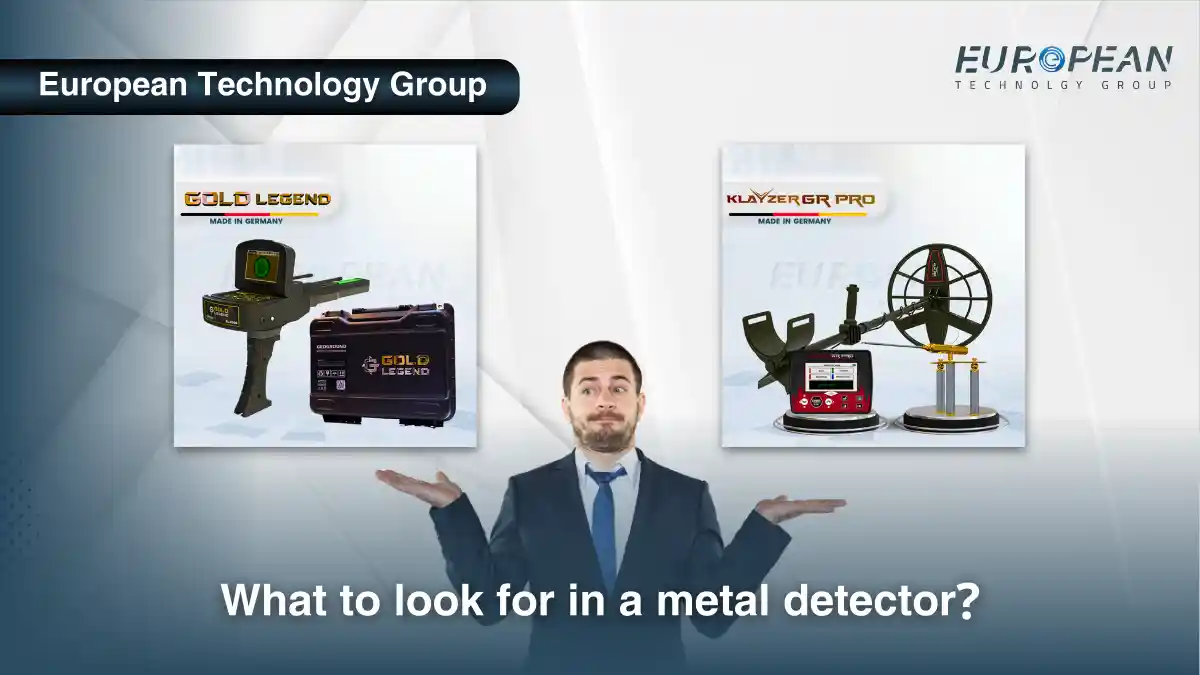
When deciding on a metal detector, it's essential to focus on several key features that will determine the efficiency and enjoyment of your treasure hunting. First and foremost, consider the detector's sensitivity and depth detection. These features dictate how small and how deep the objects can be detected, which is crucial for any serious detectorist. Next, assess the discrimination controls, which allow you to differentiate between various types of metals and ignore unwanted items like scrap iron. Additionally, the type of coil, whether concentric or double-D, affects the scanning area and depth, influencing where and how you can search. Also, think about the weight and ergonomics of the detector—comfort is paramount during long hours of searching. Lastly, consider the adaptability of the device to different terrains, which is vital if you plan to explore diverse environments. By prioritizing these factors, you can ensure that you choose a metal detector that fits your needs and enhances your detecting adventures.

1- The device's ability to differentiate and identify targets

Consider a metal detector's ability to differentiate between objects, which is crucial for efficient treasure hunting. Discrimination enables you to distinguish between targets based on their electrical conductivity, allowing you to ignore undesirable items like nails or bottle caps. 
Look for a detector with adjustable discrimination levels to optimize your search for valuable items and avoid wasting time on irrelevant targets.

1- The device's ability to differentiate and identify targets

2- Operating frequency and its reach to underground objects

You must know the device's capacity that is appropriate for your needs, as the metal detector's ability to detect objects of different sizes and materials is affected by its operating frequency. 
Higher frequencies excel at detecting small objects but may lack depth penetration. Conversely, lower frequencies can reach greater depth but may ignore smaller targets. 
Consider your hunting preferences and select the detector at the frequency that best suits your needs.

2- Operating frequency and its reach to underground objects

3- Search Coil Size and Shape

The size and shape of the search coil significantly impact metal detection. Larger coils enable faster ground coverage, while smaller coils excel in trash-filled areas. Finding the right balance between coverage and target separation is essential, depending on personal preferences and search conditions.

3- Search Coil Size and Shape

4- Audio and Visual Indicators

Metal detectors typically provide visual and audible feedback upon detecting an object. Audio signals may include beeps, tones, or pitch changes, while visual indicators can consist of LCD displays, LEDs, or needle gauges. Opt for a metal detector with clear and adjustable visual and audible signals for better comprehension.

4- Audio and Visual Indicators

5- Additional Features

Consider additional features that could enhance your metal detecting experience, such as waterproofing, a pinpoint mode, depth indication, adjustable shaft length, or compatibility with wireless headphones. These features can improve ease and enjoyment while searching for treasures.

5- Additional Features

6- User Reviews and Recommendations

Utilizing user reviews and recommendations is a valuable method for selecting a suitable metal detector. Explore online customer feedback and join metal detector communities to glean insights from experienced users. 
Their testimonials can provide valuable information regarding the performance, reliability, and usability of various metal detectors.

6- User Reviews and Recommendations
What to look for in a metal detector?

What are the most important international brands that provide gold detectors?

  1. Geoground, 
  2. Minelab.
  3. mega detection.

And here we reach the end of our discussion about what to look for in a metal detector? and We also learned about the most important international brands through which you can purchase gold detectors, and do not forget that you have the opportunity to purchase these devices through Eurotechnology Group, The world’s first company specializing in gold detectors, gold ore detectors, metal detectors, and groundwater detectors.

What to look for in a metal detector?

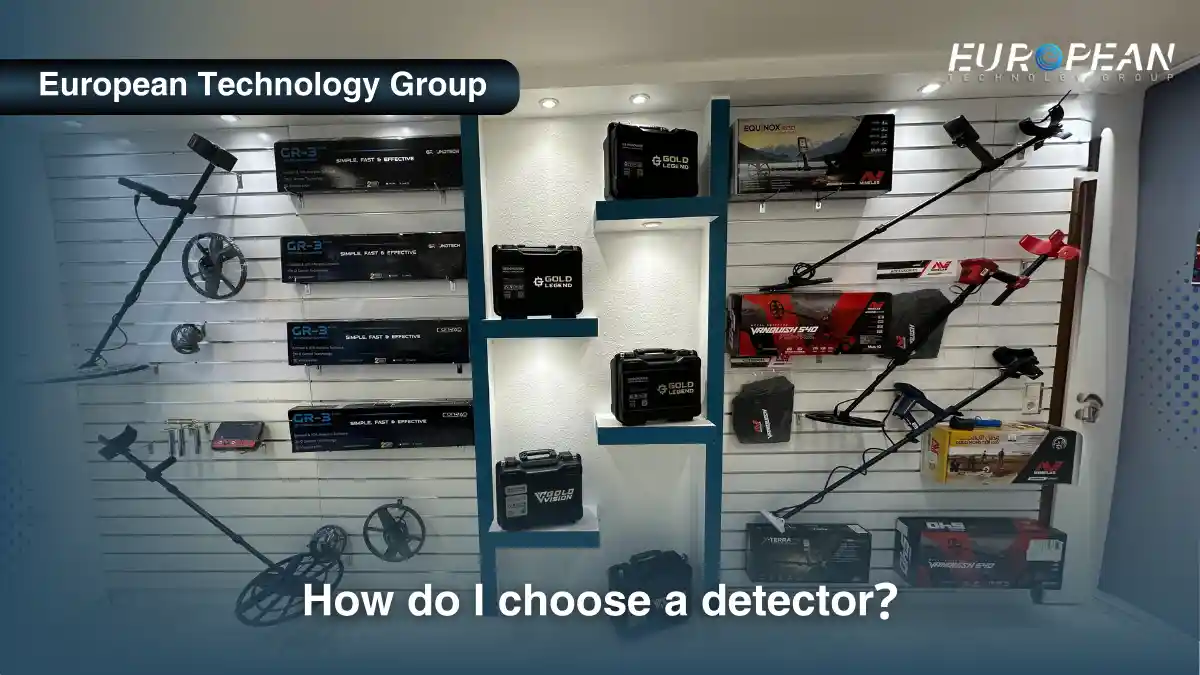
How do I choose a detector?

  • Decide how much you're willing to invest in a metal detector.
  • knowing your target will help you choose the right model.
  • Some detectors are specifically designed for certain terrains, so choose one that suits your intended use.
  • Look for features such as discrimination, sensitivity, depth detection, and ground balance.
  • Take the time to read reviews from other users to get an idea of the performance and reliability of different detectors.
  • Try out different detectors before making a purchase. Many hobby shops and metal detecting clubs offer rentals or demo days where you can test out different models in real-world conditions.
Frequently Asked Questions

Some of your questions and inquiries about What to look for in a metal detector?

What do I look for in a good metal detector?

The size and shape of the search coil can significantly impact your metal-detecting experience. Larger coils enable you to cover a wider area, facilitating faster ground coverage. Conversely, smaller coils are more effective for pinpointing targets in areas cluttered with debris.

What numbers are good on a metal detector?

With higher numbers on the VDI scale, the metal's conductivity typically increases. For instance, a VDI reading of 40-45 commonly indicates the presence of an aluminium can, while a range of 60-70 suggests a pull tab from a soda can. A reading between 80-85 typically signifies a nail, whereas a VDI of 95 or higher often indicates the detection of a coin.

Conclusion

By considering these factors and doing your research, you can choose a metal detector that's perfectly suited to your needs and preferences.

Read Also:
Comments (0)

European Technology Group
Do not hesitate to contact us anytime
Karlsruher Str. 18, 30880 Laatzen, Germany
info@eurodetector.com
Get in Touch

Our international sales department will contact you immediately

Best Offers

Some of products that our customers usually buy

Eng. Sami
Typically replies directly
Eng. Sami
Hi there 👋

How can we help?
Start Chat